
“One Like the Son of Man Came with the Clouds of Heaven”: Daniel 7
This page is our own summary. The original belongs to BYU Religious Studies Center; please read it there.
Jared W. Ludlow explains Daniel 7’s place in the book, its vision of beasts and an everlasting kingdom, and how Joseph Smith’s teachings on the Ancient of Days open up the Son of Man prophecy.
Come, Follow Me for November 9–15 covers Daniel 1–7. In this Religious Educator article, BYU professor of ancient scripture Jared W. Ludlow looks closely at the chapter that ends that block, Daniel 7, and at the phrase Jesus used for Himself more than any other in the Gospels: "Son of Man."
A hinge in the book
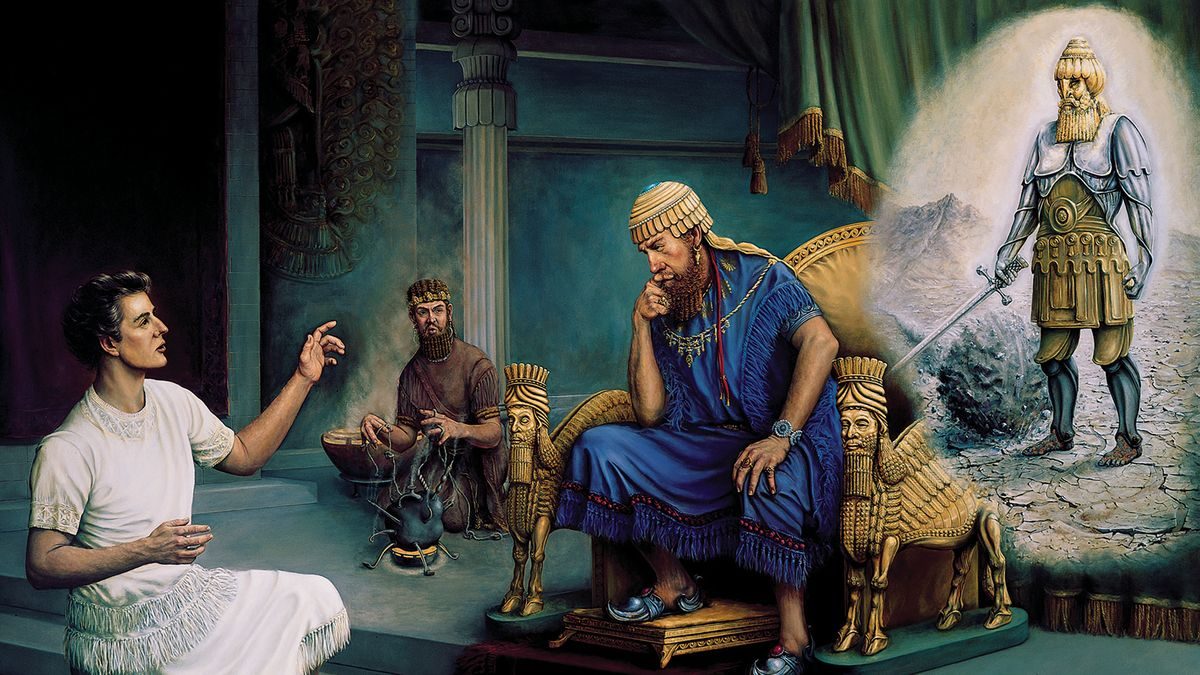
Ludlow explains that Daniel falls into two parts. Chapters 1–6 tell the court stories of Daniel and his friends in Babylon; chapters 7–12 are apocalyptic visions. Daniel 7 sits at the turning point. It opens the visions while echoing chapter 2, where earthly kingdoms are destroyed by a stone cut out of the mountain without hands. Even the language shifts here: much of the book through chapter 7 is in Aramaic, and the rest is in Hebrew.
Beasts and a kingdom
In Daniel's vision, four beasts rise from the sea and devour those around them. Ludlow notes that the beasts stand for political kingdoms, and that God's kingdom is never pictured as a beast. Then the Ancient of Days takes His throne, and "one like the Son of man came with the clouds of heaven" to receive an everlasting dominion.
He acknowledges that scholars debate when the book was written, but says the message is the same either way: it strengthens covenant people living under the pressure of foreign powers by promising that predatory kingdoms will end and God's kingdom will last.
Restoration light
The article traces how Joseph Smith identified the Ancient of Days as Adam. Joseph named Adam-ondi-Ahman in Missouri as the place where Adam would come to visit his people, "as spoken of by Daniel the Prophet," and Doctrine and Covenants 116 says the same. Ludlow summarizes the picture this gives of a great council before the Second Coming, where Adam meets with Christ and many Saints, and keys and stewardships are returned to the Savior as He begins His millennial reign.
What it means for us
Ludlow cautions against pulling the prophecy out of its setting, and suggests one of its main points is a warning: the ideas of worldly kingdoms will hold sway until Christ returns, and they must not crowd out our devotion to God. Meanwhile we are invited to pray and work for the kingdom of God until it fills the whole earth.
How we wrote this: we read the source page linked above and summarized it in our own words, quoting at most a short line with attribution. We have not added facts from outside that source. If anything here differs from the original, the original is correct.