
The Sticks of Judah and Joseph: Reflections on Defending the Kingdom
This page is our own summary. The original belongs to BYU Religious Studies Center; please read it there.
Ahead of next week’s Come, Follow Me reading in Ezekiel, Joseph M. Spencer traces how Latter-day Saints came to read Ezekiel 37’s two sticks as the Bible and the Book of Mormon, and what that history teaches about defending the faith.
Ahead of next week's Come, Follow Me reading in Ezekiel (November 2–8), BYU scholar Joseph M. Spencer takes a fresh look at one of the best-known Latter-day Saint uses of the Old Testament: Ezekiel 37's prophecy of the sticks of Judah and Joseph.
Where the familiar reading came from
Spencer traces the common view that the "stick of Joseph" is the Book of Mormon back to W. W. Phelps, who raised it in the Church's first newspaper, The Evening and the Morning Star, in 1832. Within a few years Parley P. Pratt and others championed it, and by the late 1830s it was standard among the Saints. Critics, however, argued that the prophecy describes a union of two peoples, not two books, and Latter-day Saint defenders kept answering them for more than a century.
What the revelation actually says
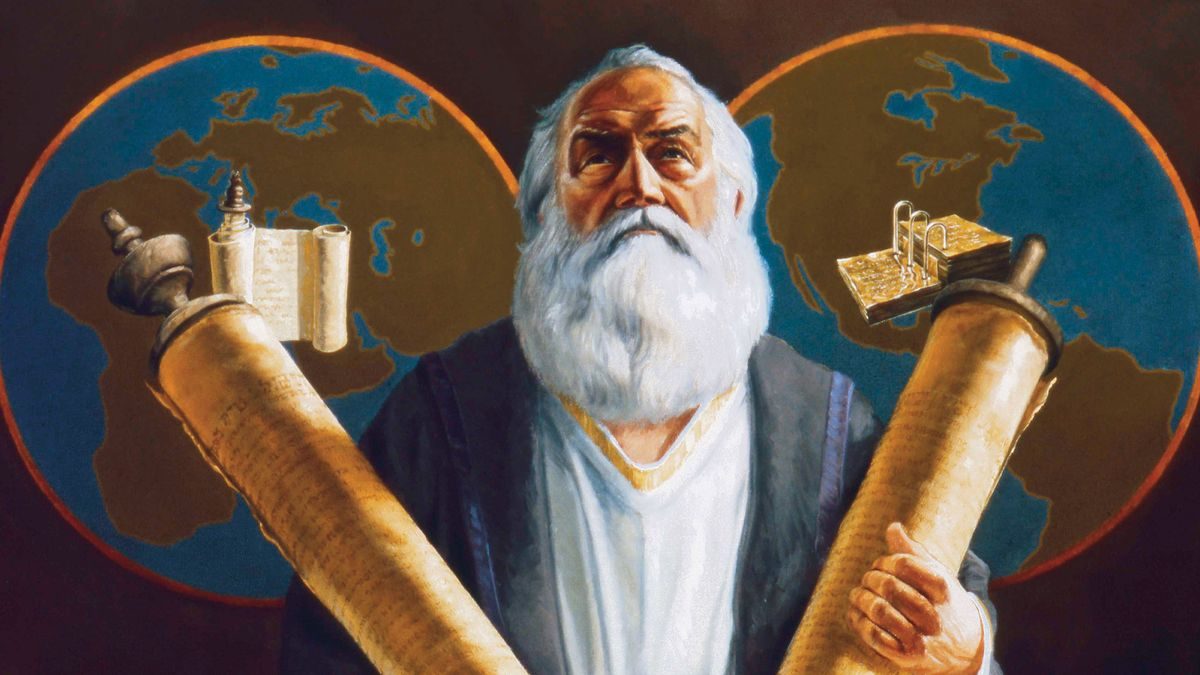
Many readers assume Doctrine and Covenants 27:5 settles the question. Spencer points out that it does not call the Book of Mormon "the stick of Ephraim"; it speaks of Moroni holding the keys of "the record of the stick of Ephraim." In his reading, the sticks stand for the two divided peoples of Israel, Judah and Joseph, and each produces its own record: the Bible for Judah and the Book of Mormon for Joseph.
That fits what biblical scholars broadly agree on: Ezekiel's symbolic act of holding two sticks together as one predicts the reunification of divided Israel. Spencer connects it to Lehi's prophecy in 2 Nephi 3:12 that the writings of Joseph's and Judah's descendants would "grow together."
A lesson for defending the faith
Spencer's larger point is about apologetics. Rather than a proof-text for winning debates, he argues, Ezekiel 37 contains a real promise; for those who receive the Book of Mormon in faith, it becomes a divinely confirmed prophecy of what remains to be accomplished in Israel's gathering. His counsel: be slower and more careful in defending the Restoration, and first obtain a real understanding of the kingdom of God we hope to defend.
How we wrote this: we read the source page linked above and summarized it in our own words, quoting at most a short line with attribution. We have not added facts from outside that source. If anything here differs from the original, the original is correct.